
 AI-Taxi App
 AI-Food App
 AI-Property Mgmt App
 AI-CRM
 AI-Fantasy App
 Web Development
 App Development
 Business & Startup
 Hire Developer
 Digital Marketing
 Lead-generation
 Creative Agency
 Branding Agency
 Augmented Reality
 Virtual Reality
 Internet of Things
 Artificial Intelligence
 Blockchain
 Chatbot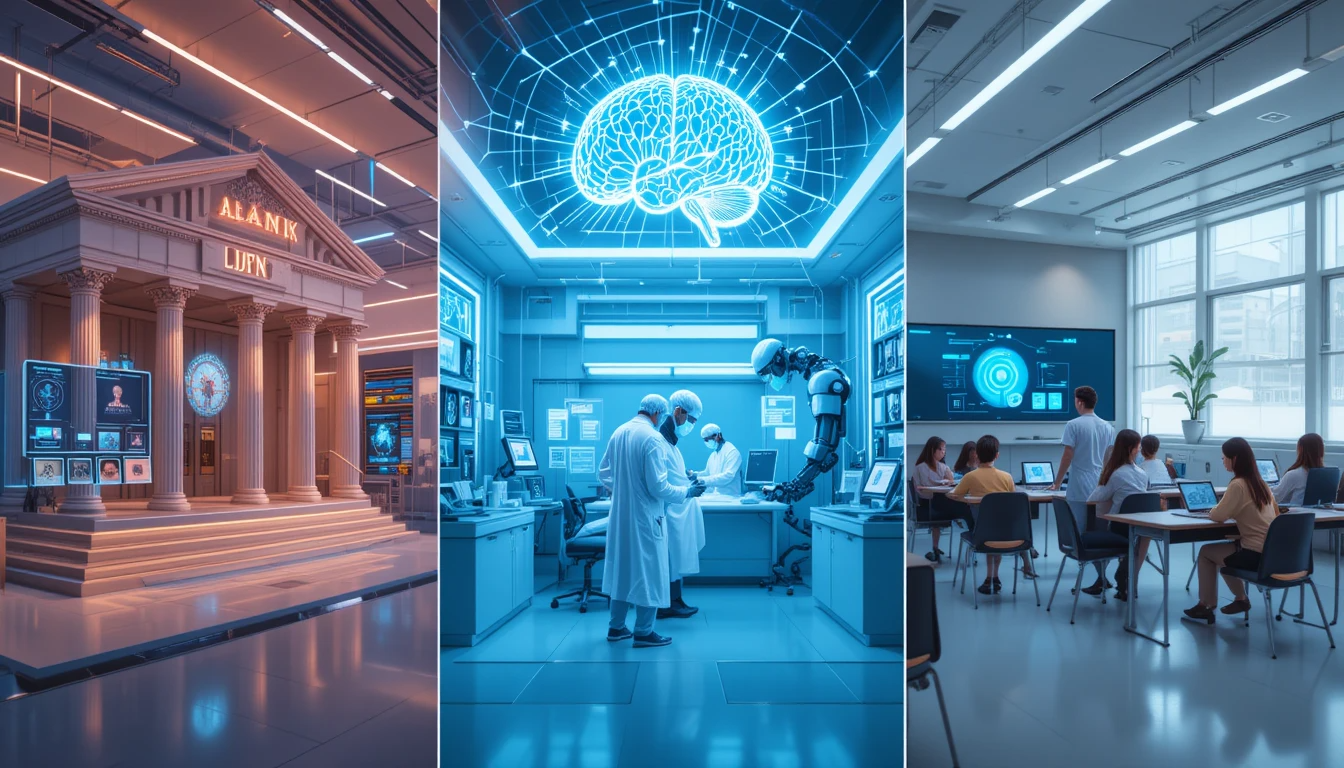
While the loudest voices debate whether AI will replace jobs or rule the world, a quieter, more powerful shift is happening behind the scenes.

(AI is not stealing the spotlight it’s becoming a lifeline)
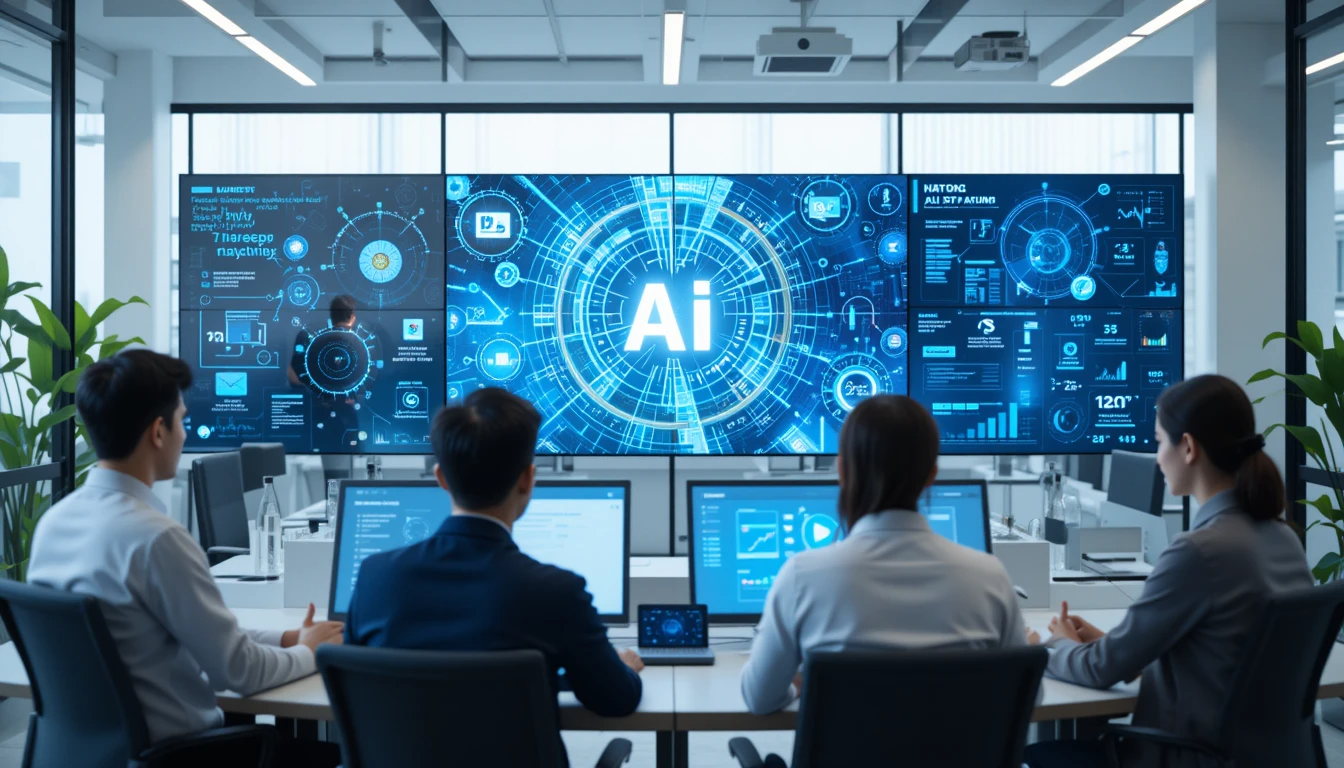
Artificial Intelligence (AI) is rapidly reshaping how we live and work, with new developments emerging almost daily. At its core, AI is about building intelligent machines capable of performing tasks that typically require human intelligence. Unlike traditional machines that rely on human control, AI systems are designed to operate autonomously learning, adapting, and making decisions on their own.
Though AI as a scientific discipline is still evolving, its impact is already profound. Major strides in machine learning (ML) , a critical subset of AI have sparked a paradigm shift across industries, from healthcare and finance to manufacturing and communication. While the full potential of AI has yet to be realized, its trajectory suggests a future where smart automation becomes an integral part of our daily lives.
AI Usage Around the World
AI is in use globally across a variety of different industries and sectors. While its usage is still growing, it is already being utilized by car companies looking to build autonomous vehicles, and delivery companies are using AI technology in drones.
Outside of the transport sector, AI has been seen in our homes in personal assistants like Siri and Alexa, and we each use AI daily in our online web searches. Added to these examples, AI is used in business to help fight spam and even prove complex mathematical equations.
As you can see, AI is not limited to any one sector or vertical but has applications everywhere.
In Banking: AI is Guarding Our Trust
Big Banks Are Betting on AI
Financial institutions are well aware that AI is more than just a buzzword, it's a business imperative.

(AI is transforming banking from fraud detection to 24/7 customer service)
According to an OpenText survey:
75% of banks with assets over $100 billion are already implementing AI solutions.
Only 46% of smaller banks (with assets under $100 billion) are doing the same.
This gap shows that larger banks are leading the AI race, leveraging advanced technologies to optimize fraud detection, automate customer service, and gain predictive financial insights leaving smaller institutions playing catch-up.

(AI adoption is no longer optional it’s a competitive edge)
AI in Banking: More Than Just Bots
When we talk about AI in banking, it’s important to remember that its impact isn’t limited to just one area it's reshaping multiple layers of the financial ecosystem.
Two of the most widely adopted applications are:
Chatbots and Virtual Assistants: These are revolutionizing customer service by offering 24/7 support, resolving queries instantly, and reducing human workload all while improving customer satisfaction.
Anti-Fraud & Payment Security Tools: Behind the scenes, AI systems are analyzing transaction patterns in real-time to detect and prevent fraudulent activities often before customers even notice.
Smarter, Safer, More Strategic
Artificial Intelligence is doing more than just automating tasks, it's unlocking new levels of intelligence and foresight for the banking sector. Here's how:
1. Enhanced Customer Experience
AI analyzes customer journeys, behaviors, and patterns to:
Anticipate common questions before they’re asked
Deliver personalized responses via chatbots and recommendation engines
Enable smarter upselling and cross-selling based on customer needs
2. Expense & Fraud Detection at Scale
On the corporate side, AI tools help:
Detect and prevent expense fraud, invoice tampering, and suspicious transactions
Analyze financial anomalies in real-time
Save banks millions in operational losses annually
3. Strategic Decision-Making & Trend Forecasting
As AI becomes more advanced with cognitive process automation, it begins to:
Detect socioeconomic trends and market shifts
Predict customer behavior and financial sentiment
Guide banks toward new revenue streams and operational models
AI in Healthcare: Faster Diagnosis, Smarter Care
AI plays a critical role in healthcare, where it helps speed up the classification and diagnosis of patients and symptoms. Using AI tools, medical staff can automate many processes that previously required skilled professionals. This includes tasks like the evaluation of CT scans as well as the analysis of EKG results.

When talking about AI in healthcare, it is important to realize that the services provided through AI systems are only increasing as hospitals recognize even greater patient and financial benefit. It is expected that AI will drastically reduce medical costs with its improved ability to provide accurate diagnosis paired with enhanced treatment plans. In fact, one study suggests that AI can be applied to the problem of patient dosage scenarios with a potential annual saving of $16 billion.
Benefits of AI in Healthcare: Beyond Diagnosis
AI in healthcare is not only limited to the analysis of patients, however. It can also be applied as a tool to benefit patients. The creation of devices like the Brain-Computer Interface (BCI), for example, can be of great use to patients suffering from spinal cord injuries or other impairments. BCIs can use AI systems to understand and decode neural activities helping these patients communicate.

AI investment runs the gamut of the medical profession, with many different departments working to realize the benefits. Some of these areas include:
Radiology
Imaging
Disease Diagnosis
Telehealth, and more.
In telehealth, for example, patients can describe their symptoms to a chatbot, which can then provide an initial diagnosis and suggested course of treatment. Another great example of AI in healthcare is its use in early cancer detection. Some medical institutions are utilizing AI when screen patients and through the analysis of blood tests. The expectation is that when this is fully developed, it will help detect cancer earlier helping to directly save lives.
This is only the start of AI in healthcare. AI applications that are still being investigated like AI-assisted surgeries are still in our future. These new technologies need to be investigated and prioritized to improve our health and that of future generations.
AI in Education: From One-Size-Fits-All to One-on-One for All
There was a time when every student sat through the same lesson, at the same pace, regardless of how differently they learned. But not anymore.
Today, Artificial Intelligence is stepping into classrooms not to replace teachers, but to reimagine how learning happens.
And the change is powerful.
Artificial Intelligence is quietly rewriting the rules of how we teach and learn. No longer bound by traditional classroom limitations, AI is helping educators personalize, simplify, and scale education like never before.
Learning That Adapts to the Learner
AI is turning education into a two-way conversation.
Whether a student needs extra time on a concept or is racing ahead with curiosity, AI-powered platforms adjust in real-time giving each learner a path that fits them.
It’s no longer “one-size-fits-all.” It’s “one-on-one for all.”
Helping Teachers Do What They Do Best
Instead of spending hours grading papers or tracking attendance, teachers are now free to do what they came here to do: connect, guide, and inspire.

(AI is turning education into a personal journey one learner at a time)
AI takes care of the routine.
Teachers take care of the heart.
A Personal Tutor in Every Pocket
From AI tutors that explain math problems at midnight to chatbots answering “What’s my next assignment?” students have round-the-clock support like never before.
For some, this isn’t just convenience. It’s confidence.
Education Without Limits
With AI-driven tools:
A rural student in Tamil Nadu can get access to the same quality of learning as a city student.
A child with learning difficulties can find a method that works for them.
A teacher can spot when a student is falling behind before it becomes a crisis.
So, What’s Next?
The future of education isn’t about replacing blackboards with bots.
It’s about using technology to give every student a fair shot and every teacher a helping hand.
If we do it right, AI won’t just make education smarter it will make it more human.
Conclusion
While Artificial Intelligence often grabs headlines for its flashy breakthroughs, its real impact is happening quietly behind the scenes, where it’s supporting, simplifying, and strengthening our daily lives.
From detecting fraud before it drains a bank account…
To catch cancer before it spreads…
To guide a student who just needs one more explanation to finally "get it"...
AI isn’t just changing industries. It’s changing outcomes. And more importantly, it’s changing lives.
The future isn’t about machines replacing people, it's about machines helping people do more, reach further, and thrive better.
So whether you're a banker, doctor, teacher, or just a curious mind now is the time to start asking:
"How can AI become a lifeline in my world?"
Because the revolution is already here. Quietly. Powerfully. Humanely.
For more information contact : support@mindnotix.in
Mindnotix Software Development Company